
The lubrication of the bearing is to enable the bearing to operate normally, to avoid direct contact between the raceway and the rolling body surface, to reduce the friction and wear inside the bearing, to extend the service life of the bearing, to enhance the performance of the bearing, but also to prevent rust and corrosion caused by foreign matter intruding into the bearing
1. Manual lubrication
This is the most primitive method, in the case of insufficient bearing oil, the oiler oil supply.But this method is difficult to maintain a certain amount of oil, due to negligence to forget the greater risk of refueling, usually only for light load, low speed or intermittent movement occasions, it is best to operate, in the refueling hole set dust cover or ball valve, with felt, cotton, wool as a filter device.
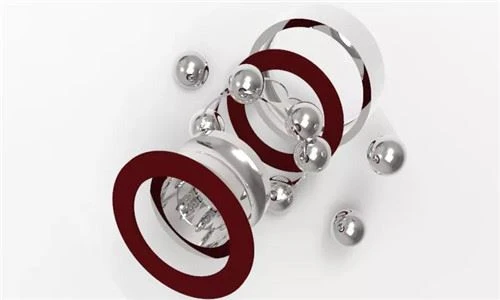
2. Drip lubrication
Generally used for light and medium load bearings with circumference speed less than 4 ~ 5m/s. The most classic type is the drip oil cup. The amount of drip oil varies significantly with the viscosity of the lubricating oil, the bearing clearance and the position of the oil supply hole.
3, Oil ring lubrication
It is suitable for medium speed and high speed bearings with shaft diameter greater than 50mm. The oil ring should be seamless. When the bearing width/diameter ratio is less than 2, only one oil ring can be used, otherwise two oil rings are needed.
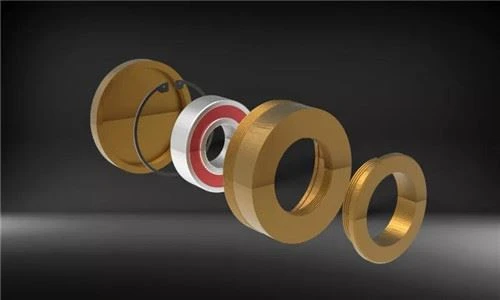
4,Oil rope lubrication
Depending on the capillary and siphon function of the oil rope, the lubricating oil in the oil cup is introduced into the bearing, which is mainly used for light and medium load bearings with circumference speed less than 4 ~ 5m/s. In addition, the oil rope can play a filtering role in the whole process.
5. Pad lubrication
Using the capillary action of the oil pad, the lubricating oil in the oil pool is applied to the axle diameter surface. This method can make the friction surface keep clean often, but the dust can also block the capillary pores, resulting in insufficient oil supply.The oil supply for pad lubrication is usually only 1/20 of that for oil lubrication.
6. Oil bath lubrication
This lubrication method is a part of the bearing immersed in lubricating oil, usually used for vertical shaft thrust bearings, but not for horizontal shaft radial bearings.
7. Splash lubrication
The lubricating oil which depends on the splash of the rotating parts in the oil tank is supplied to the bearings, suitable for bearings of higher speed.
8. Spray lubrication
The lubrication method of spraying the lubricating oil on the friction surface after atomization is suitable for high-speed bearings.
9, Pressure oil lubrication
Feed oil to the bearing by the pressure of the lubrication pump, and recycle the lubricating oil from the bearing to the oil pool for recycling. It is the most stable lubrication method with the most oil supply. It is suitable for high-speed, heavy-duty and important sliding bearings.
10. Circulating oil lubrication
The filtered oil is transferred to the bearing parts by an oil pump, which is then filtered and cooled by the lubricating oil behind the bearing.Since the circulating oil can take away a certain amount of heat and cool the bearing, this method is suitable for the bearing parts with high speed.
11. Spray lubrication
The high pressure oil is injected into the bearing through the nozzle with the oil pump, and the oil injected into the bearing flows into the oil groove through the other end of the bearing.When bearing at high speed, rolling element and cage with high rotate speed makes the surrounding air, the air in general it is difficult to be sent to the bearing lubricating oil lubrication method, use the method of high-pressure jet spray the lubricating oil must be taken to the bearing, the position of the nozzle should be placed between inner ring and retainer center.
Bearing lubrication is a continuous work, the replacement period of lubricating oil depends on the use of the bearing conditions and the amount of oil.Under normal circumstances, when it is used in a good environment with operating temperature below 50℃ and little dust, it should be replaced once a year. When the oil temperature reaches 100℃, it should be replaced once in 3 months or less.