
1、Turning processing-refers to lathe processing is a part of mechanical processing. Lathe processing mainly uses a turning tool to turn a rotating workpiece. Lathes are mainly used to process shafts, discs, sleeves,and other workpieces with rotating surfaces. They are the most widely used type of machine tool processing in machinery manufacturing and repair factories. Turning is a method of cutting the workpiece on the lathe by rotating the workpiece relative to the tool. The cutting energy of turning is mainly provided by the workpiece rather than the tool.

2、Milling processing-Milling processing is one of the most commonly used processing methods in machining. It mainly includes plane milling and contour milling. It can also perform drilling, expansion, reaming, boring, countersinking,and thread processing on parts. CNC milling is mainly suitable for the processing of the following types of parts.
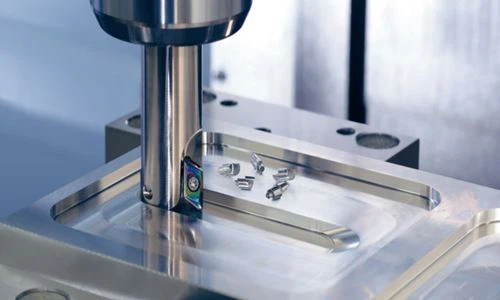
3、Grinding process-Grinding refers to the processing method of using abrasives and abrasive tools to remove excess material on the workpiece. Grinding is one of the more widely used cutting methods.

4、 Selective laser melting—In a groove covered with metal powder, the computer controls a beam of high-power carbon dioxide laser to selectively sweep the surface of the metal powder. Where the laser goes, the metal powder on the surface layer is completely melted and combined, but the place not illuminated remains in the powder state. The whole process needs to be carried out in a sealed chamber filled with inert gas.
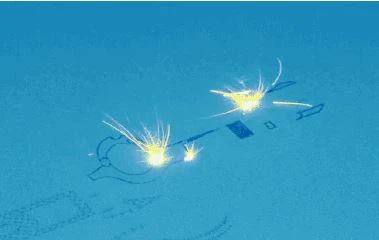
5、 Selective laser sintering-the SLS method uses infrared lasers as energy sources, and most of the modeling materials used are powder materials. During processing, the powder is first preheated to a temperature slightly lower than its melting point, and then the powder is leveled under the action of a leveling stick; the laser beam is selectively sintered according to the information of the layered cross section under computer control, and one layer is completed Then the next layer of sintering is performed, and after all the sintering is completed, the excess powder is removed, and a sintered part can be obtained. The current mature process materials are wax powder and plastic powder, and the process of sintering with metal powder or ceramic powder is still under study.

6、Metal deposition—it is somewhat similar to the "squeezed cream" type of fused deposition, but the spray is metal powder. While spraying the metal powder material, the nozzle also provides high-power laser and inert gas protection. In this way, it will not be limited by the size of the metal powder box, and can directly manufacture larger-volume parts, and it is also very suitable for repairing locally damaged precision parts.

7、 Roll forming-Roll forming method uses a set of continuous racks to roll stainless steel into complex shapes. The sequence of the rollers is designed such that the roller profile of each frame can continuously deform the metal until the desired final shape is obtained. If the shape of the component is complex, up to thirty-six racks can be used, but for simple-shaped components, three or four racks are sufficient.

8、Die forging—refers to a forging method that uses a mold to form a blank on a dedicated die forging equipment to obtain a forging. The forgings produced by this method have precise dimensions, small machining allowances, complex structures,and high productivity.
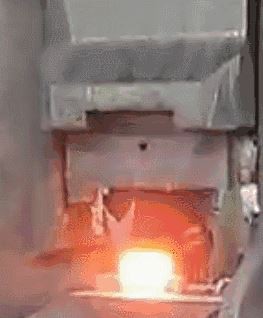
9、 Die-cutting-the blanking process, the film formed in the previous process is positioned on the male die of the punching die, the die is closed to remove the excess material, and the 3D shape of the product is retained to match the mold cavity.
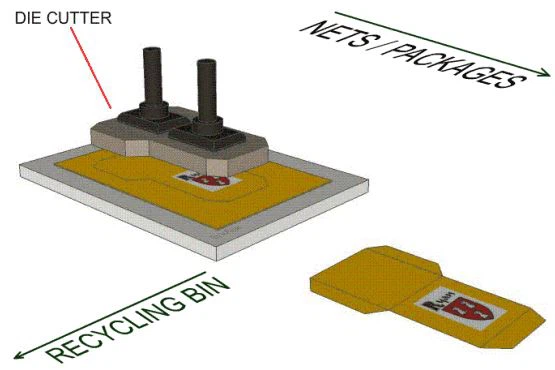
10、Die cutting process-knife die-knife die blanking process, position the film panel or circuit on the bottom plate, fix the knife die on the machine template and use the force provided by the machine to control the blade to cut the material. The difference between him and the punching die is that the cut is smoother; at the same time, by adjusting the cutting pressure and depth, it can punch out indentation, half-break,and other effects. At the same time, the low-cost mold operation is more convenient, safer,and faster.
11、 Centrifugal casting-is the technology and method of injecting liquid metal into a high-speed rotating mold so that the molten metal fills the mold and forms a casting under the action of centrifugal force. The casting mold used in centrifugal casting, according to the shape, size,and production batch of the casting, can choose the non-metallic type (such as sand mold, shell mold,or investment shell mold), metal mold or coating layer or resin sand layer in the metal mold Of casting.

12、 Lost foam casting-is to combine paraffin wax or foam models similar to the size and shape of the casting into model clusters. After brushing and drying refractory coatings, they are buried in dry quartz sand for vibration modeling, and poured under negative pressure to make The model is vaporized, the liquid metal occupies the position of the model, and the new casting method is formed after solidification and cooling. Lost foam casting is a new process with almost no margin and precise molding. This process does not require mold taking, no parting surface, no sand core, so the casting has no flash, burr,and draft angle, and reduces the core Size error caused by the combination.
13、 Squeeze casting—also known as liquid die forging, is to directly inject molten metal or semi-solid alloy into an open mold and then close the mold to generate filling flow to reach the outer shape of the part, and then apply high pressure to make The solidified metal (shell) produces plastic deformation, the unsolidified metal is subjected to isostatic pressure, and high-pressure solidification occurs at the same time, and the final product or blank is obtained. The above are direct squeeze casting; and indirect squeeze casting refers to the molten state The metal or semi-solid alloy is injected into the closed mold cavity through the punch, and high pressure is applied to crystallize and solidify under the pressure to form the final product or blank.
14、 Continuous casting-is a casting method in which liquid metal is continuously poured in one end of a through a mold, and the molding material is continuously drawn out from the other end.

15、Drawing-is a plastic processing method that uses external force to act on the front end of the metal to be drawn to pull the metal blank from the die hole smaller than the section of the blank to obtain a product of the corresponding shape and size. Since drawing is mostly performed in a cold state, it is also called cold drawing or cold drawing.
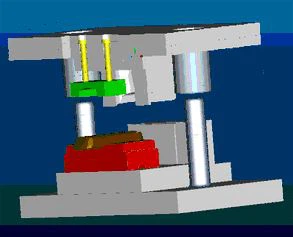
16、 Stamping-is a forming processing method that relies on presses and molds to apply external force to plates, strips, pipes, and profiles to cause plastic deformation or separation, so as to obtain workpieces (stamping parts) of desired shape and size.
17、 Metal Injection Molding (MIM) is a new type of powder metallurgy near-net forming technology derived from the plastic injection molding industry. As we all know, plastic injection molding technology produces various products with complex shapes at low prices. , But the strength of plastic products is not high. In order to improve its performance, metal or ceramic powder can be added to the plastic to obtain products with higher strength and good wear resistance. In recent years, this idea has been developed to maximize the content of solid particles and completely remove the binder during the subsequent sintering process and densify the compact. This new powder metallurgy forming method is called metal injection molding.
