
In order to make the metal workpiece with the required performance, heat treatment process is often essential.Heat treatment process generally includes heating, heat preservation, cooling three processes, because the process is different and divided into quenching, tempering, normalizing, annealing, etc., do you distinguish?
01
What is quenching?
Steel quenching is one of the steel is heated to a critical temperature Ac3 (hypoeutectoid steel) or Ac1 (hypereutectoid steel) above temperature, heat preservation for a period of time, make all or part of the austenitizing, then at greater than the critical cooling rate of cold faster cold below Ms to martensite isothermal near (or Ms) or bainite transformation of heat treatment process.The treatment of solid solution of aluminum alloy, copper alloy, titanium alloy, tempered glass and other materials or the heat treatment process with rapid cooling process is called quenching.
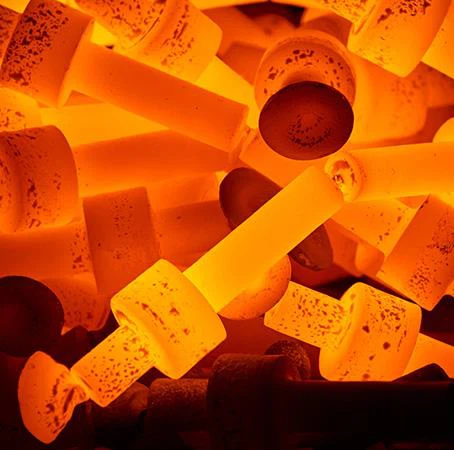
Purpose of quenching:
1) Improve the mechanical properties of metal materials or parts.For example: improve the hardness and wear resistance of tools, bearings, etc., improve the elastic limit of springs, improve the comprehensive mechanical properties of shaft parts, etc.
2) Improve the material properties or chemical properties of some special steels.Such as improving the corrosion resistance of stainless steel, increase the magnetic steel permanent magnetism.
When quenching and cooling, in addition to reasonable selection of quenching medium, but also a correct quenching method, the commonly used quenching method, mainly single quenching, double quenching, classification quenching, isothermal quenching, local quenching and so on.
Steel workpiece after quenching has the following characteristics:
(1) Obtained martensite, bainite, residual austenite and other unbalanced (that is, unstable) organization.
(2) There is a large internal stress.
(3) Mechanical properties can not meet the requirements.Therefore, steel workpiece after quenching generally have to go through the tempering
02
What is tempering?
Tempering after quenching metal timber or parts of heating to a certain temperature, heat preservation, after a certain time in a certain way the cooling of the heat treatment process and tempering is followed by an operation, after quenching are also usually workpiece heat treatment at the end of the procedure, and thus have a combination of quenching and tempering process known as the final processing.
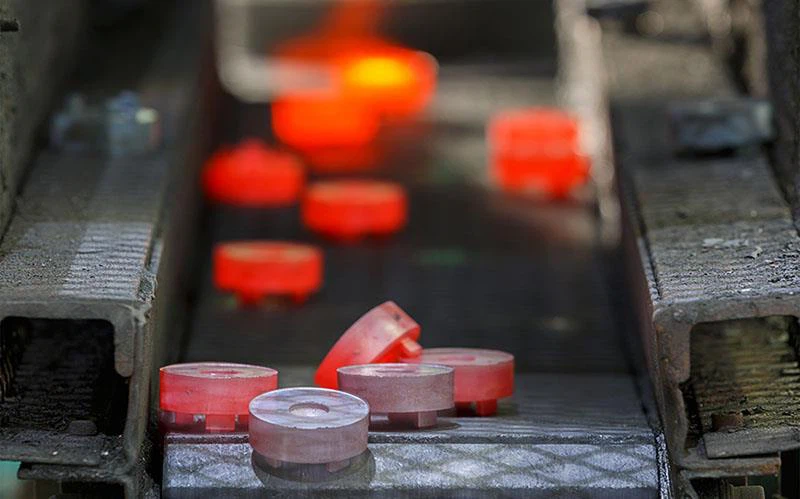
The main purposes of quenching and tempering are:
1) Reduce the internal stress and reduce brittleness, there is a lot of stress and brittleness in the quencher, such as not timely tempering will often produce deformation and even cracking.
2) Adjust the mechanical properties of the workpiece, the workpiece after quenching, high hardness, brittleness, in order to meet the different performance requirements of various workpiece, can be adjusted by tempering, hardness, strength, plasticity and toughness.
3) Stabilize the workpiece size.The microstructure can be stabilized by tempering to ensure that the deformation will not occur in the future use.
4) Improve the cutting performance of some alloy steels.
The function of tempering is:
(1) Improve the stability of the organization, so that the workpiece in the use of the process of no organization change, so that the workpiece geometric size and performance remain stable.
(2) Eliminate the internal stress, in order to improve the performance of the workpiece and stabilize the workpiece geometry.
(3) Adjust the mechanical properties of steel to meet the use of requirements.
The reason why tempering has these effects is that as the temperature rises, the atomic activity ability increases, and the atoms of iron, carbon and other alloying elements in steel can be rapidly diffused to realize the rearrangement and combination of atoms, so as to gradually transform the unstable unbalanced organization into stable balanced organization.The elimination of internal stress is also related to the reduction of metal strength as the temperature increases.General steel temper, hardness and strength of the decline, plastic increase.The higher the tempering temperature, the greater the variation of these mechanical properties.Some alloy steel with high content of alloying elements, when tempering in a certain temperature range, will precipitate some fine particles of metal compounds, so that the strength and hardness rise.This phenomenon is called secondary hardening.
Tempering requirements: the workpiece with different purposes should be tempered at different temperatures to meet the requirements in use.
(1) Tools, bearings, carburized quenched parts, surface quenched parts usually in 250℃ below low tempering.After tempering at low temperature, the hardness changes little, the internal stress decreases, and the toughness increases slightly.
(2) The spring in 350 ~ 500℃ tempering temperature, can obtain higher elasticity and necessary toughness.
(3) In the carbon structure steel parts are usually made at 500 ~ 600℃ for high tempering, in order to obtain the appropriate strength and toughness of a good match.
When steel is tempered at about 300℃, its brittleness often increases, which is called the first kind of brittleness.Generally should not be tempered in this temperature range.Some medium carbon alloy structural steels tend to become brittle if they are slowly cooled to room temperature after tempering at high temperature.This phenomenon is called the second type of temper brittleness.Adding molybdenum to steel or cooling in oil or water during tempering can prevent the second type of tempering brittleness.This brittleness can be eliminated by reheating tempering steel of the second kind to the original tempering temperature.
In production, often according to the requirements of the performance of the workpiece.According to the heating temperature, the tempering is divided into low tempering, medium tempering, and high tempering.The heat treatment process combining quenching and subsequent high temperature tempering is called tempering, which is characterized by high strength and good plastic toughness.
1) Low-temperature tempering: 150-250℃, M, reduce internal stress and brittleness, improve plastic toughness, high hardness and wear resistance.Used for making measuring tools, cutting tools and rolling bearings.
2) Tempering at medium temperature: 350-500℃, T, with high elasticity, plasticity and hardness.Used for making springs, forging dies, etc.
3) High temperature tempering: 500-650℃, S cycle, with good comprehensive mechanical properties.Used for making gears, crankshafts, etc.
03
What is normalizing?
Normalizing is a heat treatment that improves the toughness of steel.After heating the steel member to Ac3 temperature above 30 ~ 50℃, heat preservation period of air cooling.The main characteristic is that the cooling rate is faster than annealing but lower than quenching, and the steel crystal grain can be refined in the slightly faster cooling during normalizing, which not only can obtain satisfactory strength, but also can significantly improve the toughness (AKV value), reduce the cracking tendency of members.The mechanical properties of some low alloy hot rolled steel plates, low alloy steel forgings and castings can be greatly improved by normalizing, and the cutting properties can also be improved.
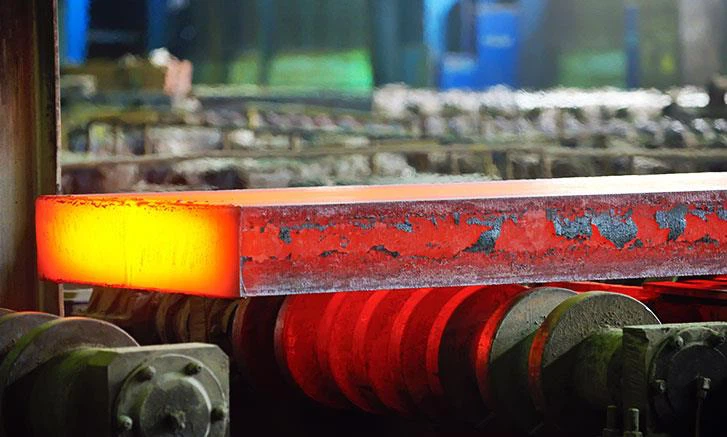
Normalizing has the following purposes and USES:
(1) For the subeutectoid steel, normalizing to eliminate the casting, forging, welding parts of the superheated coarse grain structure and wei's structure, rolling strip structure;Refine grain;And can be used as pre-heat treatment before quenching.
(2) For hypereutectoid steel, normalizing can eliminate the network secondary cementation, and make pearlite refinement, not only improve the mechanical properties, and is conducive to the subsequent spheroidization annealing.
(3) For low carbon deep drawing sheet steel, normalizing can eliminate the free cementite at grain boundary, so as to improve its deep drawing performance.
(4) For low carbon steel and low carbon low alloy steel, the use of normalizing, you can get more thin sheet pearlite structure, hardness increased to hb140-190, to avoid the cutting "sticky knife" phenomenon, improve the machinability.For medium carbon steel, normalizing is more economical and convenient when normalizing and annealing are available.
(5) Ordinary carbon structural steel, in the mechanical performance of the occasion is not high, the use of normalizing instead of quenching and tempering at high temperature, not only easy to operate, and make the steel structure and size stability.
(6) High temperature normalizing (Ac3 above 150 ~ 200℃) due to the high diffusion rate at high temperature, can reduce the composition segregation of castings and forgings.The coarse grains after high temperature normalization can be refined by a second normalization at lower temperature.
(7) For some low and medium carbon alloy steels used in steam turbines and boilers, normalizing is often used to obtain bainite structure, and then through high temperature tempering, used at 400 ~ 550℃ with good creep resistance.
(8) In addition to steel pieces and steel, normalizing is also widely used in the heat treatment of ductile iron, so that it can obtain pearlitic matrix, improve the strength of ductile iron.
As normalizing is characterized by air cooling, ambient temperature, stacking mode, airflow and workpiece size have an impact on the microstructure and performance after normalizing.Normalizing microstructure can also be used as a classification method for alloy steels.Alloy steel is usually divided into pearlitic steel, bainitic steel, martensite steel and austenitic steel according to the microstructure obtained by air cooling after heating a sample with a diameter of 25 mm to 900℃.
04
What is annealing?
Annealing is a metal heat treatment process in which a metal is slowly heated to a certain temperature, kept for a sufficient time, and then cooled at a suitable rate.Annealing is divided into complete annealing, incomplete annealing and de-stress annealing.The mechanical properties of annealed materials can be tested by tensile test or by hardness test.Many steels are supplied in the state of annealing and heat treatment. Hardness of steels can be tested by rockwell hardness tester to test HRB hardness. For thinner steel plates, steel strips and thin-walled steel tubes, surface rockwell hardness tester can be used to test HRT hardness.
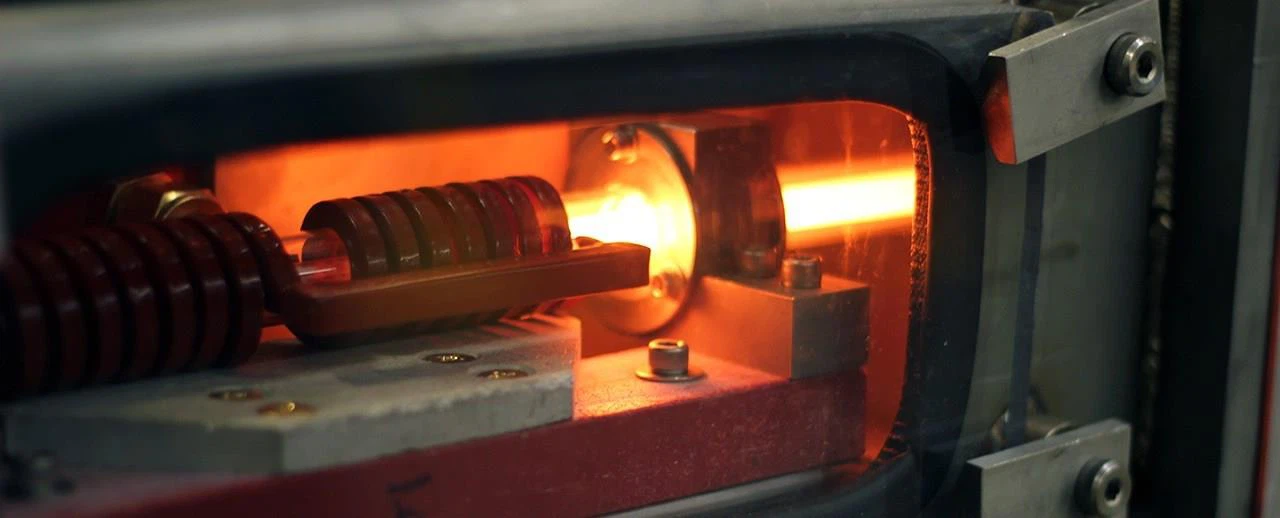
The purpose of annealing is:
(1) Improve or eliminate the steel in the casting, forging, rolling and welding process caused by a variety of defects and residual stress, prevent deformation, cracking of the workpiece.
(2) Soften the workpiece for cutting.
(3) Fine grain, improve the organization to improve the mechanical properties of the workpiece.
(4) For the final heat treatment (quenching, tempering) to prepare the organization.
Common annealing processes include:
(1) Complete annealing.For refining medium and low carbon steel after casting, forging and welding after the mechanical properties of the large overheating structure.The workpiece is heated to 30 ~ 50℃ above the temperature at which all ferrite is converted to austenite, and the heat is kept for a period of time. Then, with the slow cooling of the furnace, the austenite is changed again during the cooling process, which can make the steel microstructure become fine.
(2) Spheroidization annealing.Used to reduce the high hardness of tool steel and bearing steel after forging.The workpiece is heated to 20 ~ 40℃ above the temperature at which the austenite begins to form in the steel. After the heat preservation, it is cooled slowly. During the cooling process, the lamellar cementant in the pearlite turns into a ball, thus reducing the hardness.
(3) Isothermal annealing.Used to reduce the high hardness of some alloy structural steels with high content of nickel and chromium for cutting.Generally, it is cooled to the most unstable temperature of austenite at a relatively fast speed first, and the hardness can be reduced when the austenite is converted to tortolite or sostenite for a proper time.
(4) Recrystallization annealing.It is used to eliminate the hardening phenomenon (hardness increase, plasticity decrease) of wire and sheet in the process of cold drawing and cold rolling.The heating temperature is generally 50 ~ 150℃ below which the austenite of steel begins to form. Only in this way can the work hardening effect be eliminated to soften the metal.
(5) Graphitization annealing.Used to make cast iron with lots of cementite into malleable iron with good plasticity.The process operation is to heat the casting to about 950℃, keep the heat for a certain time and then cool it properly, so that the cementite can decompose into agglomerate flocculent graphite.
(7) Diffusion annealing.Used to homogenize the chemical composition of alloy castings and improve their performance.The method is to heat the casting to the highest possible temperature without melting, and keep the casting warm for a long time.
(8) Stress annealing.Used to remove the internal stress of steel castings and welds.For steel products, after heating, the austenite begins to form at a temperature below 100 ~ 200℃, and the internal stress can be eliminated by cooling in the air after heat preservation.