
In CNC machining, after choosing a tool, many people usually do not understand how much cutting speed and how much speed to choose, but only through experiments, as long as there are no special problems, they think it is ok. This is very dangerous, and the problem that often occurs is that the knife breaks, or the material melts or scorches. There is no scientific calculation method, the answer is yes.
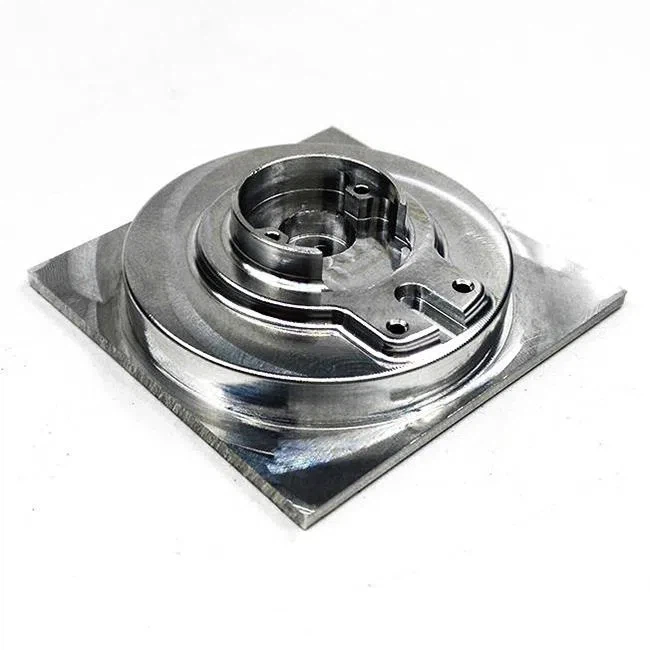
1. Milling cutting speed
The cutting speed of CNC milling refers to the instantaneous speed of the selected point on the tool relative to the corresponding point of the workpiece.
The cutting speed of CNC milling is affected by factors such as tool material, workpiece material, rigidity of machine tool components, and cutting fluid. Usually lower cutting speeds are often used to machine hard or ductile metals, which are powerful cuttings to reduce tool wear and extend tool life. Higher cutting speeds are often used to machine soft materials in order to obtain a better surface finish. Higher cutting speeds can also be used when small-diameter tools are used to perform micro-cutting on brittle material workpieces or precision components.
2. Feed rate
The feed rate of CNC milling is another equally important factor that determines the safe and efficient machining of the machine tool. It refers to the relative travel speed between the workpiece material and the tool. For multi-tooth milling cutters, since each tooth participates in CNC milling and cutting, the thickness of the workpiece to be cut depends on the feed rate. The thickness of the cut can affect the life of the milling cutter, and excessive feed rates can cause the cutting edge to break or the tool to break.
3. Depth of cut
The third factor to consider when CNC milling is the depth of cut. It is limited by the cutting amount of the workpiece material, the spindle power of the machine tool, the tool and the rigidity of the machine tool. Generally, the depth of cut of steel cutting end mills should not exceed half of the tool diameter. For cutting soft metals, the depth of cut can be larger. The end mill must be sharp and must work concentrically with the end mill chuck with as little overhang as possible when the tool is installed.