
Product Introduction
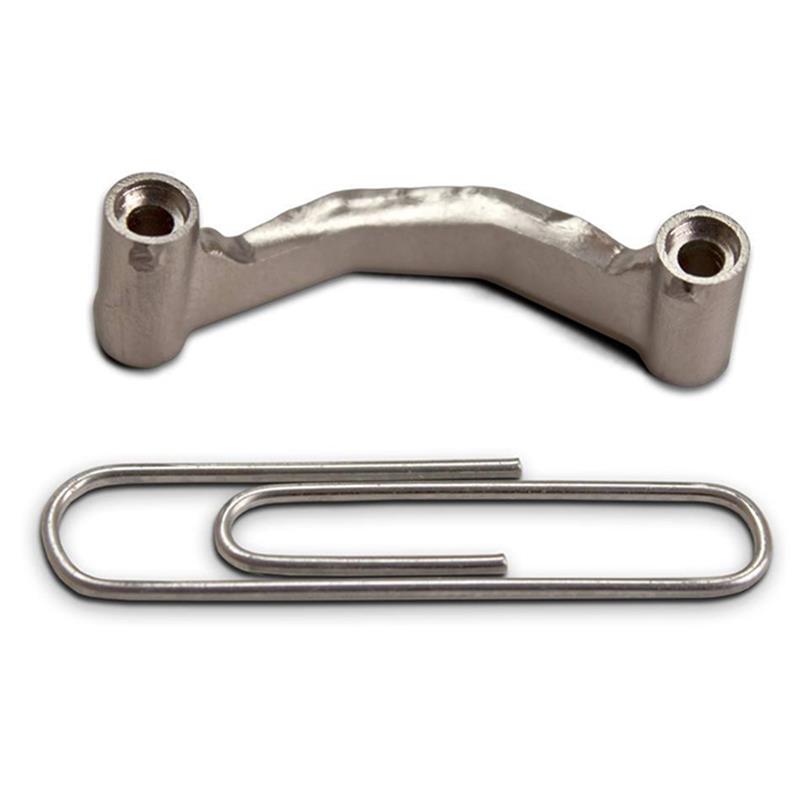
Medical Machining. Medical Machining refers to all of the CNC machining related to surgical implants, orthotic devices and medical instruments.
Product Parameter (specification)
Product name | Medical machining metal parts | ||
Material | Stainless Steel, titanium | Inner box size | Need asked |
Technology | CNC Milling, Drilling, Forging | Carton size | |
Colour | Need asked | Packaging instruction | Carton Box |
Application | Automotive industry, Marine equipment, food machinery, building hardware, heat treatment equipment, petroleum equipment and accessory for high-speed rail, nuclear power station and aerospace | Mode of transport | Express;air;shipping |
Product size | Proofing time | 1-7days | |
Net weight | Delivery time | 15-30days | |
Gross weight | Need asked | Place of origin | China |
Warranty | 12 months | After sales service | 24 hours online |
Product feature and application
Application of precision CNC machining of medical parts
● Surgical precision CNC machining equipment
● Laboratory medical numerical control equipment
● Medical micromachining of radiological equipment parts
Our customized CNC work includes:
● The collimator of a CT scanner
● Nuclear magnetic resonance table component
● The anode of the X-ray system
● Tiny components and gears for cardiac devices
● Insertion devices used in DNA analysis
● Implantable medical device components
● Plastic surgery USES five axes of titanium implants
● There is a lot more
Production details
· Product name:medical machining metal parts
· Material:Stainless Steel, titanium
· Machining Tolerances:0.01mm
· Machining Process:CNC Milling, Drilling, Forging
· Min. Order:100PCS.
· Surface Treatment:Polishing, Heat Treatment, Chroming, TD coating
· Packing:Carton Box, Blister tray, Pallet, Wooden Case.
· Certificate:ISO9001:2008, ISO/TS16949


Deliver,shipping and serving
Q1. What is your terms of packing?
A: Generally, we pack our wheels in brown cartons and also accept to design customers' logo on carton.
Q2. What is your terms of payment?
A: T/T 40% as deposit, and 60% before delivery. We'll show you the photos of the products and packages before you pay the balance. Also, we accept flexible safe payment term, T/T, WESTERN UNION, PayPal.
Q3. What is your terms of delivery?
A: FOB, CFR, CIF, DDU, DDP
Q4. How about your delivery time?
A: The specific delivery time depends on the items and the quantity of your order.
1. For stock wheels: we need 7 days to prepare cargo after deposit receipt.
2. For production order: generally, it will take 15 to 40 days after receiving your advance payment.
Q5. What is your sample policy?
A: We can supply the sample if we have ready parts in stock, but the customers have to pay the sample cost and the courier cost. Tell us the sample you prefer and we will check our stock.
Q6. Do you test all your goods before delivery?
A: Yes, we have 3 times 100% test before delivery.
Q8: How do you make our business long-term and good relationship?
A: 1. We keep good quality and competitive price to ensure our customers benefit ;
2. We renew our wheels design and expand wheels range in short time, try to give you more complete wheel mold list;
3. We respect every customer as our friend and we sincerely do business and make friends with them, no matter where they come from.
Q9.: What's your best convenient contact way:
Call: +86 137 9879 5337 (whatsapp&wechat)
Email: sales@chinacncpartsfactory.com
FAQ
Q1: What are the commonly used sterilization methods of medical devices?
(1) heating sterilization
The use of high temperatures to kill microorganisms (above the maximum growth temperature). Heating sterilization principle: when high temperature effects on microorganisms, the first cause cell physiological and biochemical reaction rate is accelerated, the body is sensitive to temperature of substances such as protein, nucleic acid, irreversible damage as the temperature increases, and lead to the change of cell protoplast, the enzyme structure damage, so that the cells lost life function in coordination, to stop the growth and development. With the continuous action of high temperature, intracellular protoplasm solidifies, enzyme structure is completely destroyed, activities disappear, biochemical reactions stop, metabolic activities such as osmotic exchange disappear, and cells die. Heating sterilization can be divided into dry heat sterilization and wet heat sterilization two categories.
1) Dry heat sterilization using hot or hot air sterilization without saturated steam participate in the sterilization is called dry heat sterilization. Because dry heat sterilization is easy to use, the method is simple, so it is widely used in production. Such as flame sterilization: direct use of flame to kill microorganisms, it is also known as incineration sterilization. This method can be used to sterilize thoroughly and quickly, but it is only suitable for metal inoculation tools, tube orifice and contaminated articles. Hot air sterilization: that is, use hot air to sterilize in the electric constant temperature drying oven.
2) Heat and humidity sterilization is the method of using steam for sterilization.Hot and humid sterilization is divided into high pressure, atmospheric pressure, intermittent sterilization and pasteurization.
Due to the high pressure steam has a strong penetration and a higher temperature than normal pressure, can greatly shorten the sterilization time, improve the work efficiency, and protein is easy to denaturate in hot and humid conditions, in hot steam conditions, bacterial spores at 120℃, after 20 ~ 30 minutes can be all killed. If the sterilizing material is large in volume and not easy to be penetrated, the pressure can be increased to 0.152 mpa and extended to 1 ~ 2 hours. In high pressure steam sterilization, the sterilization temperature increases with the increase of steam pressure
Q2: What does 2 kinds of medical apparatus and instruments include?
A: X-ray radiography machine B ultrasonic microscope biochemical instrument belongs to the second category, which refers to the medical instrument whose safety and effectiveness should be controlled.
Q3: Commonly used surgical instruments manual cleaning process?
A: 1. Dress code and personal occupational protection.
2. Rinse: remove rust from the rusted equipment, and rinse the rustless equipment with flowing water.The disassembled parts and screws should be disassembled and cleaned separately. Forceps with cavity such as nucleus pulposus forceps and vertebral plate bone-biting forceps should be rinsed with flowing water and be alternately closed and loosened at the same time.
3. Ultrasonic cleaning: put the instrument in a blue basket and place it in the ultrasonic cleaning machine for 8min. The machine is equipped with lonso medical multi-enzyme cleaning agent, and the ultrasonic machine is covered to prevent aerosol and noise pollution.
4. Scrub: use a plastic brush to scrub the teeth, grooves and internal and external surfaces of the instrument under the water surface to prevent aerosol and water droplets splashing. The cleaning of the teeth, grooves and internal and external surfaces of the instrument should be free from stains and rust.
5. Rinse: rinse with flowing water or soak under the water to prevent water droplets from splashing. There should be no residual detergent.
6. Disinfection: rinse or soak with disinfectant.
7. Final rinse: rinse with purified water.
8. Lubrication: soak the instrument in the anti-rust agent solution for 30s, and pay attention to prevent re-contamination of the instrument.
9. Drying: dry the oven at 70~90℃ for 20 minutes.To achieve no scale, no dirt, no rust, flexible joints.
Latest news
Classification of Medical Devices
Medical devices are divided into three categories:
The first category refers to medical devices that are safe and effective enough to ensure their safety and effectiveness through routine management. To be careful.
The first kind of medical instruments are: basic surgical knife: handle and blade, skin blade knife, wart peeling knife, lancet, spade, razor, scraper, pick knife, razor, pedicle trimmer, nail trimmer, dissecting knife, etc. Chinese style
The second category refers to medical devices whose safety and effectiveness should be controlled. The second kind of medical devices are:
(1) General diagnostic instruments: thermometers and sphygmomanometers;
(2) Physical therapy and rehabilitation equipment: magnetic therapy instruments;
(3) Clinical laboratory and analytical instruments: blood sugar analyzer and test paper for family use;
(3) Operating room, emergency room, diagnostic and therapeutic room equipment and appliances: medical small oxygen generator, portable oxygen generator;
(5) Medical sanitary materials and dressings: use degreased cotton and gauze;
(6) Medical polymer materials and products: condoms and condoms. The third category refers to medical devices implanted into the human body; used to support and maintain life; potentially dangerous to the human body, whose safety and effectiveness must be strictly controlled.
The third kind of medical devices are as follows:
1. Disposable use of sterile medical instruments
1) Disposable use of sterile syringes
2) Disposable use of infusion devices
3) Disposable use of blood transfusion devices
4) Disposable use of anesthesia puncture kits
5) Disposable use of intravenous infusion needles;
6 ) Disposable sterile injection needles;
7 ) Disposable plastic blood bags;
8 ) Disposable blood collectors;
9 ) One-time use of titration tube infusion device.
2. Orthopaedic implant medical instruments
1 ) Joint prosthesis of surgical implant;
2 ) Metal orthodontic plate;
3 ) Metal bone connector and orthopedic nail;
4 ) Metal orthopaedic rod;
5 ) Intramedullary nail, bone nail;
3. Filling materials
1 ) Breast filling materials
2 ) Intraocular filling materials
3 ) Orthopaedic filling materials.
4. Implantable medical devices
1 ) Intraocular lens,
2 ) Artificial heart valve,
3 ) Cardiac pacemaker,
4 ) Intravascular catheters and stents
5. Corneal plastic lenses.
6. Baby incubator.
7. Plasma separation cup, plasma pipeline.
8. Hollow fiber dialyzer.